Imagine getting a video call from your company’s CEO. He’s staring right at you, speaking in his familiar voice, asking you to wire $2.3 million to a vendor account immediately. You’ve worked with him for years, so, the face matches, the voice matches and every detail checks out. So you do it. Then the real CEO calls an hour later wondering what you’re talking about.
This is not a scene from a sci-fi thriller. It happened. And in 2026, it’s happening more often than most people realize. Deepfake scams, that is frauds powered by AI-generated voices, videos, and images have officially moved from an emerging threat to a full-blown crisis. The technology that once required a Hollywood-level budget and weeks of editing can now be deployed in minutes, by anyone, for practically nothing.
If you think you’d spot a fake, think again. The stats tell a sobering story: deepfake-enabled vishing attacks surged by over 1,600% in the first quarter of 2025 alone compared to the quarter before. That number has climbed beyond usual in 2026. Understanding what these scams look like, how they’re evolving, and what you can do about them isn’t optional anymore.
What Are Deepfake Scams? The AI Fraud You Can’t Always See Coming
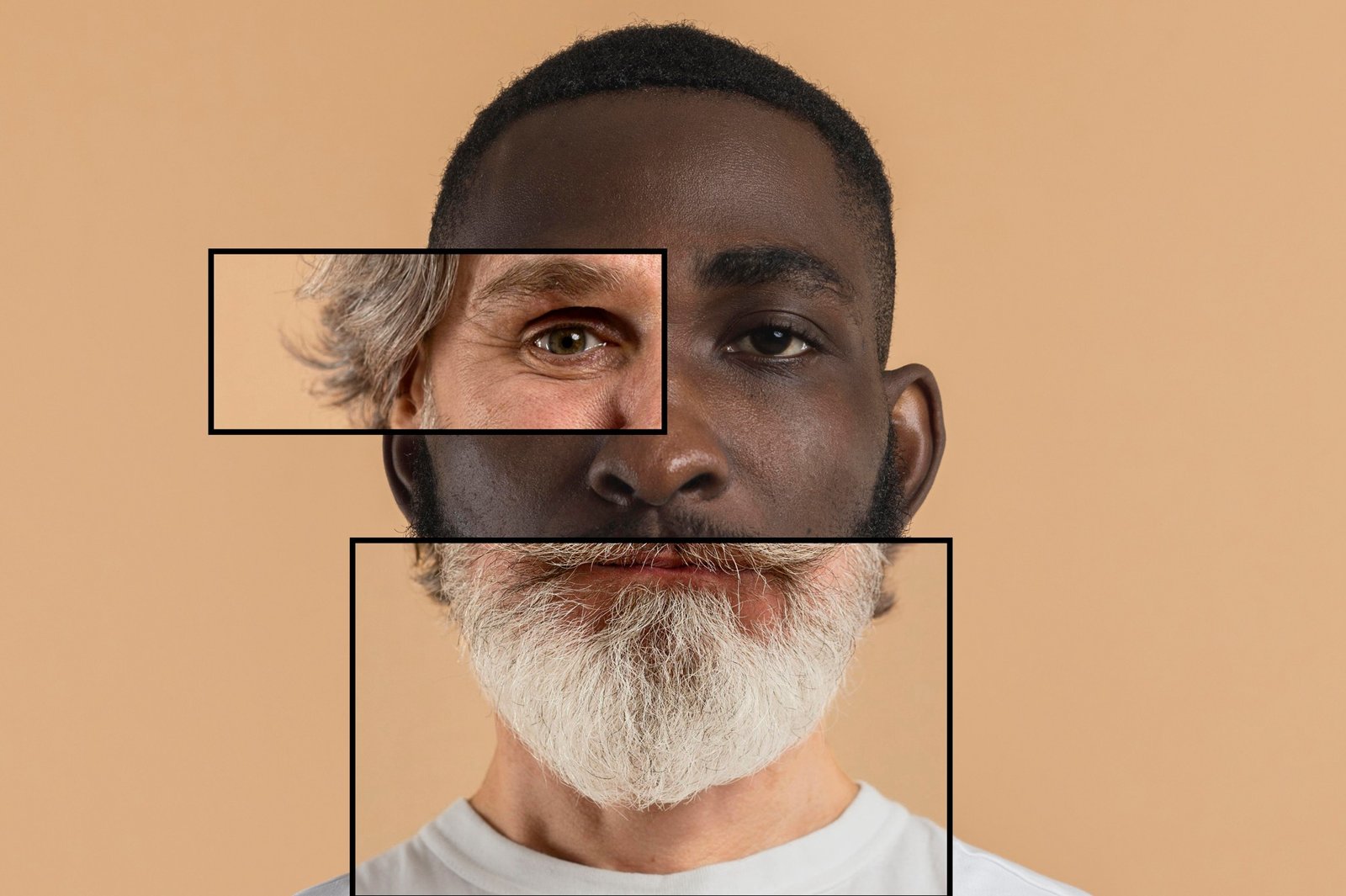
At their core, deepfake scams use artificial intelligence to generate or manipulate media such as audio, video, or still images to impersonate real people convincingly. The term “deepfake” blends “deep learning” (a form of AI) with “fake,” and the technology works by training algorithms on real footage or voice recordings of a person until the AI can simulate them with frightening accuracy.
What’s changed in 2026 is the barrier to entry. Where earlier deepfake tools required hours of source material and technical expertise, AI voice cloning now needs as little as three seconds of public audio, just a podcast clip, a Youtube video, a corporate webinar to create a voice clone with an 85% match to the original. Video deepfakes aren’t far behind.
There are three main types of deepfake content used in fraud:
- Voice cloning: An AI-generated replica of someone’s voice, used in phone calls, voicemails, or live calls to impersonate executives, family members, or officials.
- Video deepfakes: AI-manipulated video that replaces a person’s face and syncs lip movements to new audio in near real-time.
- Synthetic identities: Entirely fabricated people, yes realistic profile photos, fake names, and backstories generated by AI, used to create fraudulent job applicants, romance personas, or crypto account holders.
These tools don’t require a hacker with a Ph.D. Deepfake-as-a-service (DaaS) platforms became widely available in 2025, making voice cloning, video manipulation, and persona generation accessible to cybercriminals of every skill level through ready-to-use subscription services. Think of it as renting a fraud toolkit by the month.
Why Deepfake Fraud Is Rising: The Forces Driving the 2026 Surge
The explosion in deepfake scams didn’t happen by accident. Several converging forces have turned this from a fringe threat into a mainstream epidemic, and they’re only accelerating.
Generative AI has gone mainstream: Tools that were once locked behind research labs are now publicly accessible and often free. Open-source voice cloning models, AI face-swap software, and large language models capable of writing convincing fraud scripts are available to anyone with an internet connection. The cost to create a fake political robocall as demonstrated in 2024 when a deepfake robocall imitating a sitting U.S. president was distributed was just $1 and took less than 20 minutes to make.
The financial payoff is enormous: Deepfake-related fraud losses in the U.S. reached $1.1 billion in 2025, tripling from $360 million in 2024. When there’s that kind of money on the table, criminals invest in better tools. Deloitte’s Center for Financial Services projected that generative AI could enable fraud losses of exponentially greater scale within a few years.
Detection is struggling to keep up: The rapid advance of AI technology often outpaces detection methods, and it is increasingly difficult for humans to distinguish real from fake. Even AI-powered detection tools have significant limitations, particularly around voice calls in real time.
Social media feeds the machine: Every video you post, every voice note you share, every professional appearance you make online becomes potential training data for someone who wants to clone you. 53% of people share their voices online or via recorded notes at least once a week, according to McAfee — most with no idea that data could be weaponized.
Legislation can’t move fast enough: AI technology is deployed faster than legislation develops. While the EU, U.S., and various nations scramble to pass anti-deepfake laws, criminals continue to operate freely in the gaps.
Real-World Deepfake Incidents: What the FBI, Europol, and CISA Are Warning About
This threat is not theoretical. Law enforcement agencies at the highest levels are sounding the alarm and the incidents backing those warnings are already on the record.
On the CNN, FBI issued multiple advisories about AI voice phishing targeting senior officials. These malicious voice messages use deepfake audio to impersonate senior U.S. officials and their contacts, raising national security alarms. The Bureau’s Internet Crime Complaint Center (IC3) received 859,532 complaints for suspected internet crimes in 2024, with losses exceeding $16 billion, a growing share of which involved deepfake-enabled fraud.
Europol has formally warned that deepfakes are set to be used extensively in organized crime. Their published analysis, Facing Reality? Law Enforcement and the Challenge of Deepfakes, highlighted how the technology is being weaponized across disinformation, financial fraud, and non-consensual media. In an early documented case, criminals defrauded an energy company of $243,000 after using an AI voice clone to impersonate the firm’s CEO.
Sometime ago, CISA together with the NSA and FBI, released a joint Cybersecurity Information Sheet warning that threats from synthetic media have exponentially increased, presenting a growing challenge for users of modern technology, national security systems, and critical infrastructure owners. The agencies urged organizations to prepare, identify, and respond to deepfake threats proactively.
One of the most chilling documented incidents: a finance employee at a multinational firm joined what appeared to be a legitimate video call with the CFO and several colleagues. Every face on the call was an AI-generated deepfake. Hong Kong police confirmed the attack, in which the employee approved a multi-million-dollar transfer after being visually and verbally reassured by people who did not exist.
In another ongoing threat, the FBI found that North Korean operatives have been using deepfake video filters during job interviews to impersonate real individuals and secure remote employment at Western technology companies, then using that insider access to steal data and funnel money back to North Korea’s weapons programs. Even a major cybersecurity firm – KnowBe4 publicly disclosed it had unknowingly hired one of these operatives.
How Criminals Are Using Deepfake Scams Right Now
The tactics are more varied and more targeted than most people expect. Here’s a breakdown of the major deepfake fraud vectors active in 2026:
CEO and Executive Impersonation (Business Email & Video Compromise)
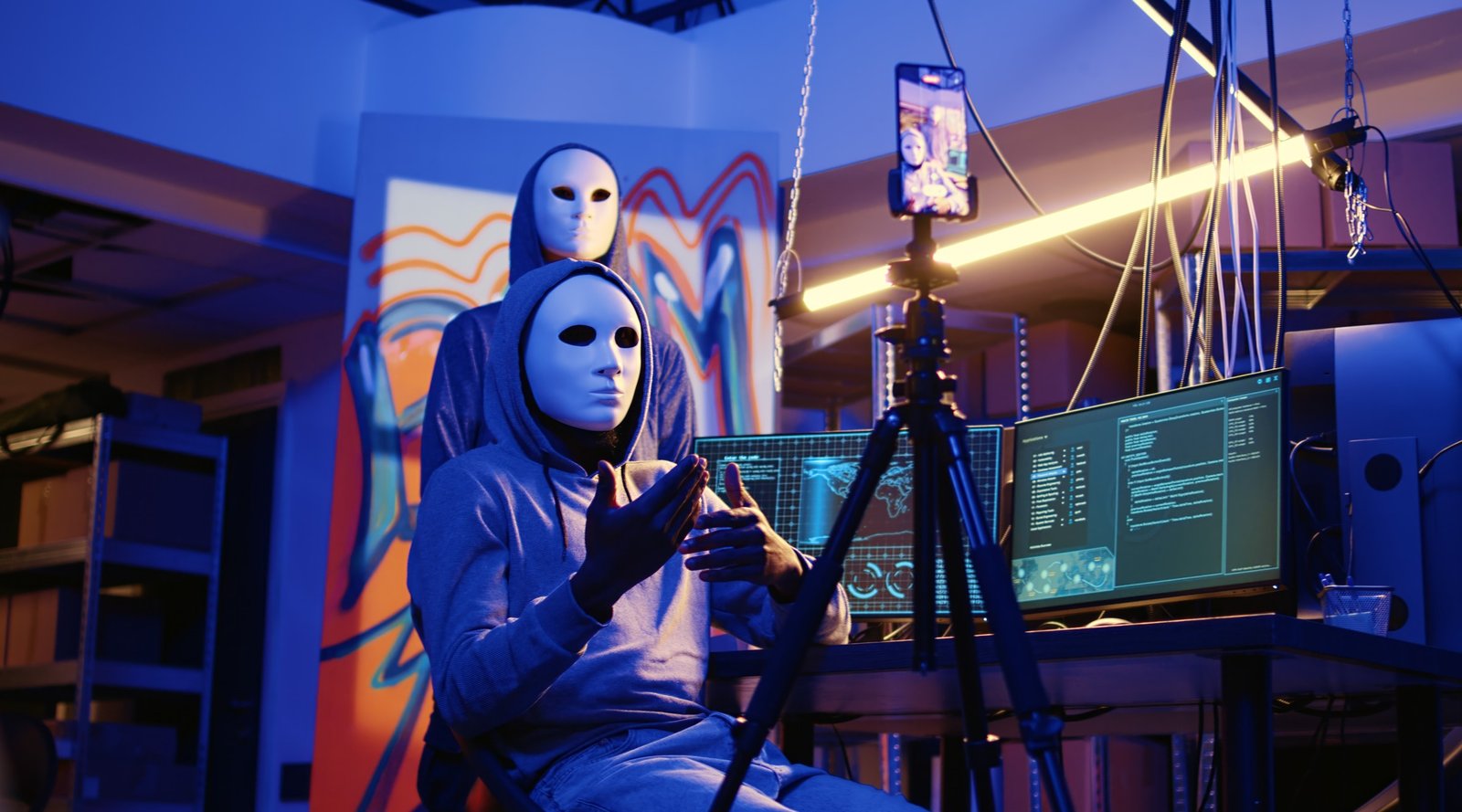
Also called “Business Video Compromise” (BVC), this involves deepfaking a company executive to authorize fraudulent wire transfers, vendor changes, or credential resets. A single attacker can generate thousands of personalized phishing emails per hour using large language models, each paired with a deepfake voice message or fake video call to add credibility. In 2026, attackers have expanded this beyond CEOs to department heads and mid-level managers, making the scams harder to flag as unusual.
Fake Job Interviews and Insider Access
As described above, AI-generated candidates submit job applications complete with fabricated professional histories, deepfaked photo IDs, and voice filters during video interviews. Once hired remotely, they harvest internal data or install malware from inside the organization’s own systems.
Romance Scams with AI Personas
Online romance fraud has been supercharged by deepfakes. Scammers now build entirely synthetic romantic personas, complete with AI-generated photos that pass reverse image searches, voice messages, and even live video calls using real-time face-swap filters to build emotional relationships with victims before asking for money. These scams are particularly devastating because the emotional manipulation runs deep before the financial ask begins. This connects closely to the broader identity-theft tactics we’ve covered in our guide to how identity theft happens and how to stop it.
Banking and Financial Fraud
Banks and financial institutions are seeing deepfake voices used to bypass voice authentication systems, a method of account verification many banks introduced as a security measure. Deepfake attacks bypassing biometric authentication increased by 704% in 2023, and the trend has accelerated sharply since. Retail banks and telecoms also report deepfake calls to customers, tricking them into “verifying” account details by impersonating bank representatives.
Crypto Scams and Investment Fraud
Deepfake videos of celebrities and financial figures endorsing fraudulent crypto platforms have proliferated across social media. Scammers clone the faces and voices of Elon Musk, Warren Buffett, and other public figures to drive victims to fake investment platforms where deposited funds disappear instantly. These are especially effective because the “endorsement” appears on what looks like legitimate news coverage or live streams.
Deepfake Scam Attack Methods: A Quick Reference
| Scam Type | Method Used | Primary Target | Typical Loss |
|---|---|---|---|
| CEO Impersonation (BVC) | AI video + voice call | Corporate finance teams | $100K – $35M |
| Fake Job Applicant | AI photo ID + voice filter | Tech & remote-first companies | Data/IP theft |
| Romance Scam | Synthetic persona + video | Individuals on dating apps | $10K – $500K+ |
| Banking Voice Fraud | Voice clone of customer | Bank verification systems | Account takeover |
| Crypto Endorsement Scam | Celebrity deepfake video | General public/investors | $1K – $100K+ |
| Political Disinformation | AI video of officials | Public trust/elections | Societal damage |
How Businesses Can Protect Themselves Against Deepfake Scams in 2026
The good news: you’re not powerless. But protecting your organization from deepfake fraud requires moving beyond “just use your judgment”, because your judgment, as trained as it might be, can be fooled by these tools.
1. Implement Multi-Factor and Out-of-Band Verification
Build a non-negotiable rule: any wire transfer, vendor change, payroll modification, or credential reset request must be verified through a pre-agreed second channel, and never the channel the request arrived on. If the email asks, verify by calling a known number from your internal directory. If the call asks, verify in person or through an internal app. This “out-of-band” confirmation breaks the attack chain for nearly all deepfake fraud attempts.
2. Deploy AI-Powered Deepfake Detection Tools
A growing category of enterprise security software can analyze video and audio in real time for signs of synthetic manipulation – unnatural blinking, audio-video sync delays, pixel artifacts around facial edges, and acoustic irregularities. Tools from companies like McAfee, Pindrop, and Reality Defender are specifically built for this. Europol has also called on law enforcement and businesses to develop automated detection techniques using machine learning and forensic analysis, accoring to Infosecurity Magazine.
3. Train Employees Regularly and Realistically
Deepfake awareness training should be part of your organization’s ongoing security education program, not a one-time checkbox. Employees should be able to identify:
- Unusual urgency or secrecy in communication.
- Requests that bypass normal approval channels.
- Video call anomalies (facial boundary blur, stiff lip movement, audio lag).
- Unfamiliar voice tonality or cadence in supposedly known callers.
This also ties into broader cybersecurity hygiene, something we’ve detailed in our post on how to avoid phishing scams in 2026, which covers the social engineering overlap between phishing and deepfake fraud.
4. Establish “Safe Word” Protocols
Some security-forward organizations are now using internal code words or challenge questions known only to their team, shared in advance through a secure, in-person channel to verify the identity of anyone making an unusual financial request over phone or video. It sounds low-tech, but it’s remarkably effective precisely because it operates outside the AI’s reach.
5. Harden Identity Verification at the Point of Hire
Organizations should implement layered background check procedures for remote hires, including live, unscripted video interviews with behavioral questions, document verification through third-party identity verification platforms, and IP and location analysis during onboarding. Gartner predicts that by 2026, 30% of enterprises will no longer consider standalone identity verification solutions reliable in isolation, meaning layered approaches are now essential.
How Individuals Can Stay Safe from Deepfake Scams in 2026
You don’t have to be a corporate finance director to be targeted. Romance scammers, grandparent scammers, and fake crypto promoters go after individuals every day. Here’s how to protect yourself:
Verify Before You Trust
If you receive an unexpected call, video request, or voice message from someone you know especially one that involves money or personal information, verify it through a completely separate channel before acting. Hang up and call the person back on a number you already have saved. Don’t trust the contact information provided in the message.
Watch for These Red Flags in Video Calls
- Blurry or slightly unnatural facial edges, especially around hairlines and ears.
- Eyes that blink infrequently or at odd intervals.
- Lips that don’t quite sync with the audio.
- An inability or reluctance to respond naturally to unexpected questions.
- Background that looks too uniform or slightly “floating”.
Never Transfer Money Under Pressure
Urgency is a weapon. Whether it’s a “stranded family member” needing bail money, a “limited-time investment opportunity,” or a “CEO” demanding an immediate wire transfer, the pressure to act fast is engineered to prevent you from thinking clearly. Slow down. Any legitimate request can wait 10 minutes for a verification call.
Enable Two-Factor Authentication on Everything
Enable two-factor authentication (2FA) on all accounts, and never share verification codes with anyone because no legitimate authority will ever ask for those over the phone. Use hardware security keys where possible; these are dramatically harder to bypass than SMS-based 2FA. Our full walkthrough on securing your accounts is available in our Zero Trust security model guide for 2026.
Limit Your Public Audio and Video Footprint
This one is harder in the age of social media, but worth thinking about. The more audio and video of you that exists publicly, the easier it is to clone you. Consider:
- Setting social media videos to private where possible.
- Being mindful of what voice-heavy content you post publicly.
- Using privacy settings aggressively on platforms that host video content.
The Road Ahead: A Threat That Will Only Get Harder to Spot
Here’s the uncomfortable truth about deepfake scams in 2026: we are in a cat-and-mouse race between fraud tools and detection tools, and right now, the fraudsters have a head start. Industry analysts project AI-augmented variants will account for more than 40% of business email compromise incidents by end of 2026. The volume of deepfake content is projected to keep growing at an extraordinary rate annually.
Legislation is catching up, slowly. The EU is pushing AI content watermarking requirements. The U.S. has introduced several anti-deepfake bills. Singapore has passed real-time fraud intervention laws. But technology always moves faster than policy, and scammers will continue to exploit that gap.
The most reliable defense isn’t any single tool or policy, but a culture of healthy skepticism combined with consistent verification habits. When something feels even slightly off about a call, a video, or a financial request, that instinct is worth honoring. Pause. Verify. Then act.
Deepfake scams thrive on the assumption that you’ll trust what you see and hear. In 2026, the safest thing you can do is learn not to take that for granted.
Final Thoughts
The technology behind deepfake scams has outpaced most people’s mental model of what’s possible. A few years ago, “AI-generated fraud” sounded like science fiction. Today, it’s a multi-billion-dollar criminal industry backed by off-the-shelf tools, professional service providers, and increasingly bold tactics.
The FBI, Europol, and CISA have all issued clear warnings. Real organizations have lost millions to fake video calls and voice-cloned executives. Individuals have lost their life savings to synthetic romantic partners who never existed. The threat is here, it’s serious, and it’s personal.
But the good news is that awareness is your first and most powerful defense. Once you understand how these scams work, the tactics start to feel familiar, and the red flags become easier to catch. Stay curious, stay skeptical, and never let urgency override verification. In the age of AI fraud, a 60-second callback could save you everything.
Have questions about protecting yourself online? Explore more resources in our Cybersecurity Learning Hub at CyberPrivacyLab.

Ozichukwu Callistus is a cybersecurity professional, researcher, and digital security advocate with hands-on experience in defensive security operations and ethical hacking. He holds the ISC2 Certified in Cybersecurity (CC), Cisco CyberOps Associate certifications, many others and works regularly with tools like Kali Linux, Wireshark, Nmap, and Security Onion. Through CyberPrivacyLab, he shares practical, research-backed guides to help readers understand threats and protect their digital lives.