
Introduction: The Big Question, Is Your Phone Listening to You?
You’re sitting at your kitchen table, casually talking to a friend about needing new running shoes. You never Googled it, never opened Amazon or even typed the word ‘sneakers’ anywhere. But within an hour, your Instagram feed is flooded with ads for Nike, Adidas and every athletic brand you’ve ever heard of. Immediately, your heart skips and you were like, my phone was listening. Yes, it had to be.
That creepy, gut-punch certainty that your device is eavesdropping feeling is one of the most common experiences in this digital age. And it’s not just you experiencing this. Millions of people across the US, UK, Canada, Australia and many other countries report the exact same thing every single year. The question isn’t whether you have felt it. The question is: is your phone actually listening to you, or is something even more unsettling going on?
The truth is more nuanced than a simple yes or no answer, and honestly, the reality of what is actually happening to your data may disturb you far more than the microphone theory ever could. This article breaks it all down, busts the biggest myths, and tells you exactly what you can do about it.
Myth #1: Is Your Phone Listening to You Through the Microphone for Ads?
Let’s tackle the big one first. The theory goes like this: apps like Facebook, Instagram, TikTok, or Google are secretly activating your microphone in the background, listening to your everyday conversations, and feeding that audio to advertisers who then serve you targeted ads.
It sounds completely plausible and frankly, terrifying. But here’s the thing: there is no credible, verified technical evidence that any major app is doing this at scale. When Meta CEO Mark Zuckerberg was questioned about it during a Senate hearing, he flatly denied that Facebook was listening to users. Apple and Google have both consistently denied microphone eavesdropping for advertising purposes.
From a technical standpoint, constant background audio recording would be a massive drain on your battery, something that security researchers would have detected long ago in network traffic analysis. Security experts who have monitored app data packets have found no evidence of audio being silently transmitted in the background.
Furthermore, secretly recording your conversations without consent would violate wiretap laws in the United States, the UK’s Investigatory Powers Act, and similar legislation across all other countries, which carrys enormous legal consequences for any company caught doing it.
One will ask, if that is not the case, why does it keep happening? Why does it feel so real? Keep reading.
Myth #2: Is Your Phone Listening to You Or Is It Your Data Doing the Talking?
This is where things get genuinely wild. You don’t need a microphone to feel like someone knows exactly what you want. Because, modern ad platforms have something far more powerful: a detailed psychological profile of you, built from thousands of data points you’ve been handing over freely for years.
According to the Electronic Frontier Foundation, when most people see weirdly relevant ads, it’s because they’ve been targeted based on enormous lists of private information collected through other covert methods and not microphones.
Here’s what advertisers actually know about you:
- Your browsing history: every site you’ve visited, how long you stayed and what you clicked.
- Your search history: This include searches you have deleted.
- Your purchase history: Purchases from e-commerce sites, loyalty programs, and linked credit cards.
- Your location data: This is tracked continuously through GPS and Wi-Fi pings.
- Your social media activity: likes, shares, comments, and how long you pause on certain posts.
- Your app usage patterns: This includes the apps you open, when opened them, and for how long.
- Your device connections: Include what Wi-Fi networks you use, what Bluetooth devices are nearby.
Data brokers collect this information from dozens of sources, often without your direct knowledge, and package it into predictive consumer profiles. These profiles are so accurate they can infer what you need before you consciously realize you need it. That’s why the running shoes ad felt like your phone was listening, but this is the reality, the algorithm already knew you were a fitness-inclined person who hadn’t bought new shoes in 14 months.
The Real Mechanism: How Phone Privacy Is Compromised Without a Single Word Being Heard
So if it’s not the microphone, what exactly is going on? It helps to understand how companies track you online and the real machinery behind targeted advertising.
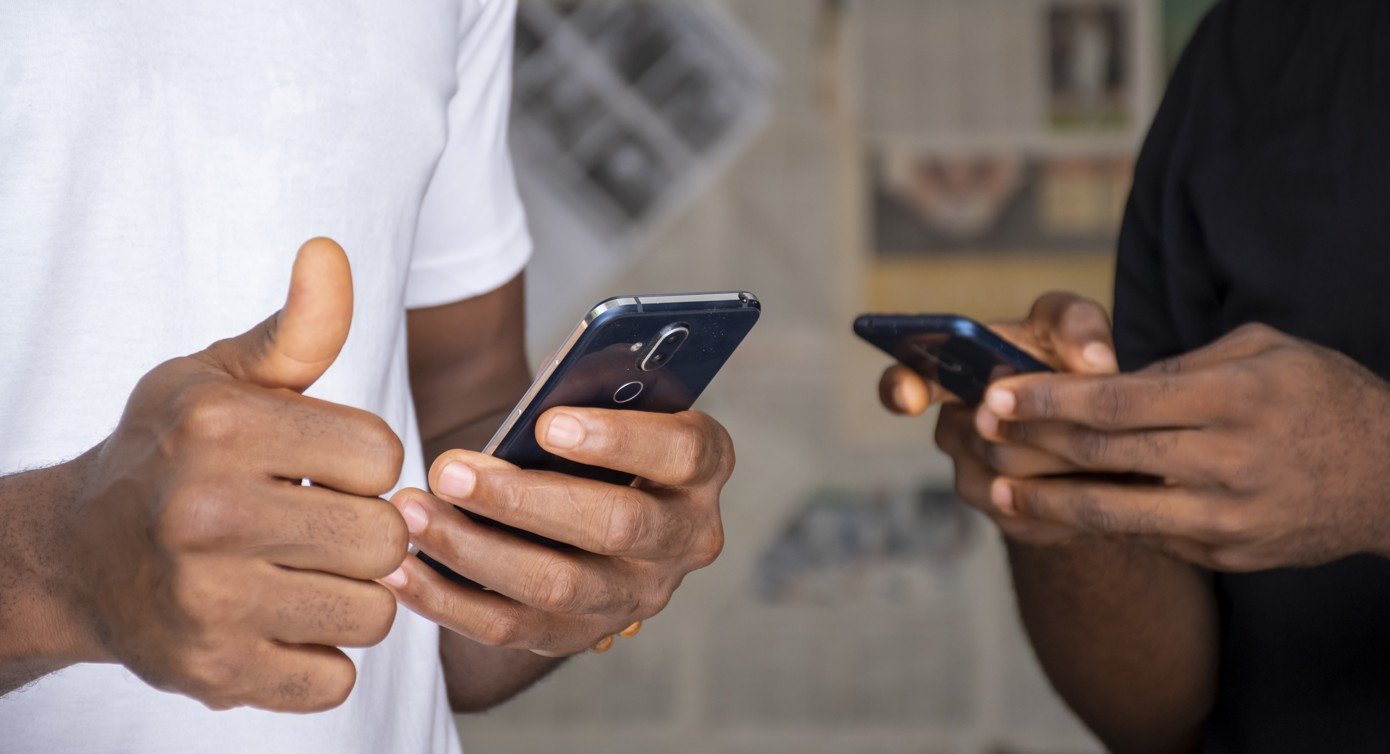
Behavioral Targeting: The Engine Behind “Creepy” Ads
Behavioral targeting is a digital marketing strategy that analyzes your online behavior such as the websites you visit, searches you run, and how you interact with content, to serve you personalized advertisements. It doesn’t need audio or your camera. It just needs the data trail you leave behind every single day you are online.
Here’s how the cycle works:
- Data collection – Cookies, tracking pixels, device identifiers, and app SDKs silently collect data about your activity across websites and apps.
- Profile building – This data is consolidated into a user profile, often enriched with third-party data broker information.
- Audience segmentation – You’re placed into targeting segments like ‘fitness enthusiast’, ‘first-time homebuyer’, ‘budget traveler’, etc.
- Real-time ad bidding – When you open an app or website, an auction happens in milliseconds where advertisers bid to show you their most relevant ad.
- Ad delivery – You see the ad and think your phone was listening. It wasn’t rather it was your data that gave you away.
The Baader-Meinhof Phenomenon Factor
There is also a psychological dimension worth mentioning. When you hear about something, let say, a new brand of headphones, your brain becomes primed to notice it everywhere. This is called the Baader-Meinhof Phenomenon (or frequency illusion). The ads were likely there before, but you only start noticing them after the idea entered your head. Then, your brain retroactively creates the narrative that your phone caused it.
Phone Privacy Myths vs Facts: A Side-by-Side Comparison
Now, let’s cut through the noise with a clear breakdown of the most common phone privacy myths and what the evidence actually says:
| Privacy Myth | The Reality | What Actually Happens |
|---|---|---|
| Your phone microphone is always on for ads | No credible evidence supports this | Apps use behavioral data and profiles instead |
| Only what you Google can be used to target you | False because data comes from dozens of sources | Location, purchase history, app use and more |
| Incognito mode makes you invisible | Partially false | Your ISP, employer, and some sites can still see you |
| Deleting an app removes your data | False | Your data often stays with the company and data brokers |
| Voice assistants only listen when activated | Mostly true, but not always perfect | False activations have been documented and reviewed by humans |
| Private mode on social media stops tracking | False | Platforms track you across the entire web via pixels |
| Covering your camera prevents surveillance | Helps for video, not data tracking | Microphone, location, and behavioral data still flows freely |
When Is Your Phone Actually Listening? The Voice Assistant Exception
Now, here’s where the story takes a slight turn. While apps aren’t secretly recording you for ads, voice assistants are a different matter and it’s important to understand the distinction.
Google Assistant, Apple’s Siri, and Amazon’s Alexa are designed to listen for their wake words (‘Hey Google’, ‘Hey Siri’, ‘Alexa’) at all times. That’s how they work. But what has come to light is that these systems have occasionally recorded audio after false activations, meaning the assistant mistakenly thought it heard its wake word.
Both Google and Apple have, at times, had human contractors review snippets of these recordings to improve accuracy. Both companies reportedly scaled back this practice in 2019 following public outcry, but it’s a reminder that the microphone access granted to voice assistants is real, and not always perfectly controlled.
Practical tip: If you don’t use voice assistants regularly, through our guide turn off microphone permissions for those apps entirely. On both Android and iOS, you can do this in your app permission settings.
Is Your Phone Listening to You Through Third-Party Apps? The Permissions Problem
One area where phone privacy genuinely is at risk is app permissions. Many apps request microphone, location, and camera access far beyond what they actually need to function. A flashlight app doesn’t need your location. A game doesn’t need your contacts. But millions of users approve these permissions without a second thought.
The Electronic Frontier Foundation advises users to regularly audit app permissions on both Android and Apple devices to ensure no apps are accessing sensitive features like the camera, microphone, or location without clear justification.
Here’s a quick checklist to audit your phone privacy right now:
- iOS users: Go to Settings → Privacy & Security and review permissions by category (Microphone, Camera, Location).
- Android users: Go to Settings → Apps → Permissions to see which apps have access to what.
- Revoke access for any app where the permission doesn’t make sense for what the app does.
- Use “Allow only while using the app” for location rather than “Always allow”.
- Regularly delete apps you no longer use, they may still be collecting data in the background.
For a deeper dive into which specific settings to change, check out our guide on critical privacy settings you must change now to prevent identity theft.
The Wi-Fi and Network Tracking Angle You Probably Haven’t Considered
Another dimension of phone privacy people rarely think about is network-level tracking. When your phone connects to a public Wi-Fi network at a coffee shop, airport or shopping mall, your device broadcasts identifying information. Retailers have been known to use this to track how long shoppers spend in certain aisles and how often they return.
Beyond that, public Wi-Fi networks carry significant risks including man-in-the-middle attacks where a bad actor intercepts the data flowing between your phone and the network. This isn’t about ads, but about someone potentially capturing login credentials, messages, and financial information in real time.
Even at home, your router logs, ISP data, and the metadata from your browsing activity paint a remarkably detailed picture of who you are and what you care about, all without a microphone ever being switched on.
What You Can Actually Do to Protect Your Phone Privacy Today
Now for the part that matters most. Whether or not your phone is literally listening, there are very real ways your privacy is being eroded daily and here’s how to push back effectively:
Immediate Actions
- Audit app permissions: revoke microphone and camera access from any app that doesn’t clearly need it.
- Use a VPN: especially on public Wi-Fi, to encrypt your traffic (see our guide on online privacy risks).
- Opt out of ad tracking: on iOS, go to Settings → Privacy & Security → Tracking and disable “Allow Apps to Request to Track.” And on Android, opt out of “Ads Personalization” in Google settings.
- Limit location data: change all app location settings from “Always” to “While Using” or “Never”.
- Use a privacy-focused browser: Firefox with uBlock Origin or Brave for daily browsing.
Longer-Term Habits
- Regularly clear cookies: clear cookies and review browser tracking settings.
- Use strong, unique passwords: a quality password manager helps enormously here.
- Review and delete data: Google, Facebook, and Amazon all let you download and delete your activity history.
- Use encrypted messaging apps: Signal over standard SMS for sensitive conversations.
- Check data broker opt-outs: services like DeleteMe or manual opt-outs on broker sites can remove your profile from the most common databases.
Conclusion: Is Your Phone Listening to You? The Honest Answer
So, is your phone listening to you? Almost certainly not in the way the conspiracy theory suggests because there’s no credible proof that major apps are quietly recording your voice and selling it to advertisers. But the uncomfortable truth is that the actual reality is more invasive in many ways, not less.
Your phone, your apps, your browsing behavior, your location, and your purchase history are constantly feeding a surveillance-grade advertising machine that knows you better than many people in your life. It doesn’t need to hear you speak because it already knows what you’re going to want next. That’s the real privacy threat and it operates completely in the open, buried in terms of service that almost nobody reads.
You know the good news? You’re not powerless. Because the steps above, from auditing permissions to opting out of ad tracking genuinely make a difference. Taking back your phone privacy starts with understanding what’s actually happening. And now you do. The next move is yours.
Have you experienced the “phone listening” feeling? Drop a comment below, share your story and share this post with someone who deserves to know the truth about their phone privacy.

Ozichukwu Callistus is a cybersecurity professional, researcher, and digital security advocate with hands-on experience in defensive security operations and ethical hacking. He holds the ISC2 Certified in Cybersecurity (CC), Cisco CyberOps Associate certifications, many others and works regularly with tools like Kali Linux, Wireshark, Nmap, and Security Onion. Through CyberPrivacyLab, he shares practical, research-backed guides to help readers understand threats and protect their digital lives.